The only mold you really want to have in your house is the stuff that is supposed to add flavor to gourmet cheeses. But the scary truth is that there is mold all around you. The spores are floating around on the air in your home, in your office building, in your child’s school and outside. On top of that, mold attaches to your clothing, to pet’s hair, to your children’s skin and to anything else it can touch. The spores are invisible, abundant and persistent. That means the world will never truly be rid of mold.
These floating mold spores spiral through the air and then touch down on the ground. If the spore just so happens to touch down in a warm, moist spot, it will multiply rapidly. You may be able to smell the forming of mold if you find that a portion of your carpet or room smells musty, like old moisture.
Mold spores especially like porous and fibrous surfaces like wood and carpet, both of which can absorb moisture and expand. When this expansion takes place, mold spores get sucked in. You may notice a smell along with dark spots along the grain of the wood. Once mold gets into the wood in your home it becomes very difficult to remove without the help of Continue reading →
This entry was posted in Mold & Mildew on November, 22, 2013
 Condensation in the basement poses a risk to health, the integrity of your home and your personal belongings. Moisture breeds all sorts of nasty molds and bacteria. These harmful organisms can get into your respiratory system and in the framing of your home. It can also cause the premature decay of any items you have stored in the basement. There are steps you can take to prevent condensation moisture, mold and bacteria.
Attack the many causes of a humid basement, one at a time. Follow these steps on preventing mold in the basement.
Seal All Basement Pipes
Most of the hot-water pipes are probably already sealed, but you can also cover the cold-water pipes. Hot-water pipes are insulated for safety; so you don’t touch a hot pipe, but insulating every pipe reduces the amount of moisture wicking off the pipes into the air. You can buy foam sleeves at a home improvement store, apply them and seal them with duct tape. The joints and turns in the pipes will have exposed areas.
Pick Up Duct Mastic or Sealant
Sealing the ducts that come from your air-forced heating and cooling systems can reduce the amount of moisture in the basement. Most heaters use humidifiers that can become leaky into the ducts. Duct tape will wear away. Mastic and sealant will seal Continue reading →
This entry was posted in Water Damage on November, 20, 2013
 Few scenarios are as disheartening as walking downstairs into your basement to start the laundry or work on a project, only to realize that the entire area is underwater. This can happen slowly over time, as water creeps in through cracks or drips in from a leaky pipe. Or the water can come in very quickly, due to a catastrophic flooding. Either way, no matter how it happened or how much or how little water is actually present, the truth remains: not only are you most definitely not getting anything done down there any time soon, but you are also going to need to have a plan to get this whole mess taken care of ASAP to minimize the damage.
Mold:
Water may be a purifying force of nature most of the time, but left in a wet basement, which is devoid of proper air circulation, it stagnates. This turns your basement into a veritable petri dish for nasty things you do not want anywhere near your home. This environment is the ideal growing condition for several strains of dangerous mold, mildew, and fungi that could put you and your family at risk.
This is especially true of the mold called Stachybotrys chartarum. Its distinctive black coloring makes it easy to identify, and it is extremely dangerous to both Continue reading →
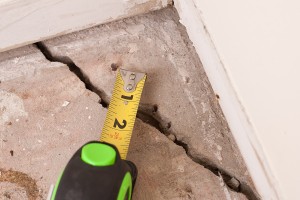 The foundation literally holds up your world. Like Atlas, it does this forever and thanklessly. But over time the foundation can crack, lean, bend, bow or even break. There is a wide variety of fixes available, which is good to know if you are in the market for some foundation repair. Each solution to your foundation’s problems comes with its own advantages and disadvantages. But some of these repairs can last a lifetime.
One of the quickest repairs available is epoxy. This super-strong stuff can be injected into cracks that are a quarter-inch thick. It can also mend stair-step cracks; cracks that zigzag through the material resembling stairs. This epoxy will keep out the water for a long while, but it is not a permanent fix for anything. Cracking foundation is a symptom of something much more serious.
Water is always the suspect. It is the only thing that can infiltrate the foundation and crack it from the inside. Water can lead to some serious foundation conditions, such as bowing. These problems can be fixed but it requires major construction projects to do so.
Wooden and steel beams can be installed. These beams go from the very floor of the basement and attach to joists on the roof of the basement. These supports will fix a leaning or bowed. However, Continue reading →
This entry was posted in Structural Damage on November, 15, 2013
 Flooded basements are no good. Not only is it dangerous when it comes to exposed electrical connections, but it ruins everything you keep down in the basement. The fallout from a flood continues up into your home. The wooden frame of the house now sits on top of a swamp. Mold and bacteria need that swampy atmosphere to thrive, so you may have a frame full of mold, rot and bacteria. Water can literally bring your whole house down. Fortunately, there are a few steps you can take to prevent basement flooding.
You might not pay attention to the gutters and drainage from your roof when you think of water in the basement, but some drainage pipes will pool water right into the foundation. This can seep into the basement and cause a flood. The goal is to push the water three feet from the house, and extenders can help do this.
Check for Cracks
Take a stroll around your house and inside your basement. If you see any visible cracks, even tiny ones, epoxy can help. Water from the ground can actually press on the walls of the foundation and push its way in. Just a little bit of water can cause a humid environment, promoting mold and bacteria. Plus, given enough time, eventually a little bit of Continue reading →
This entry was posted in Water Damage on November, 13, 2013
 As a homeowner, you may want to familiarize yourself with a few different important aspects of your building. One of the most important parts of your home is the foundation. Foundations are strong cement walls at the bottom of your building, and they may extend into the ground. If the walls go into the ground then you have a basement and an extensive foundation.
The foundation supports the weight of the home. If the foundation falters, then the walls of the home can shift. The floors can shift and become uneven, making the foundation one of the most important parts of your home. There are a few things that everyone can do to maintain the health of this important structure.
Epoxy, found readily at hardware stores, can seal up hairline cracks in the foundation. The easiest way to see hairline cracks is to wait until the concrete wall is wet. Hairline cracks will present themselves as dark spots. Upon closer inspection you’ll find small lines in the wall. Sealing them up with epoxy prevents them from getting bigger quickly.
The soil around the house can actually push into your foundation, causing problems. This is especially evident when there is a wet period followed by a dry period. The ground swells with the rainwater and then the ground shrinks as the Continue reading →
This entry was posted in Uncategorized on November, 11, 2013

 The only mold you really want to have in your house is the stuff that is supposed to add flavor to gourmet cheeses. But the scary truth is that there is mold all around you. The spores are floating around on the air in your home, in your office building, in your child’s school and outside. On top of that, mold attaches to your clothing, to pet’s hair, to your children’s skin and to anything else it can touch. The spores are invisible, abundant and persistent. That means the world will never truly be rid of mold.